Ce message est également disponible en :
Vanilla from Réunion — History, Expertise and Production
Vanilla from Réunion, from wild orchid to exceptional pod
Vanilla from Réunion is one of the most renowned vanillas in the world—an artisanal product of excellence, cultivated on the island since 1819 and acclaimed by the world’s greatest chefs. Originally from Central America and introduced to Bourbon Island in the 19th century, this precious orchid became one of Réunion’s symbols thanks to the discovery of manual pollination by Edmond Albius, a 12-year-old enslaved Réunionese boy. Today, vanilla from Réunion is recognized as a product of excellence, distinguished by the French State and considered the finest vanilla in the world by many Michelin-starred chefs.

An Exceptional History
The history of vanilla from Réunion begins in 1819, when the first vanilla cuttings were introduced to the island from Central America. For over twenty years, the orchids bloomed magnificently but produced no fruit: in the absence of their natural pollinator—a bee of the Melipona genus—pollination could not occur.
In 1841, a 12-year-old enslaved boy, Edmond Albius, from Sainte-Suzanne, discovered the technique of manual pollination of the vanilla orchid. His simple yet decisive gesture—gently lifting the rostellum that separates the male and female organs of the flower—would revolutionize the global vanilla industry and make Réunion, then called Bourbon Island, the world’s leading exporter for several decades. The designation Bourbon vanilla, still used today, derives from this historical name and refers to any vanilla produced in the Indian Ocean islands.
Throughout the 20th century, competition from Madagascar and the Comoros, where labor costs are lower, led to a gradual decline in Réunionese production. But the industry did not disappear: it refocused on quality rather than quantity, and Réunionese producers have perpetuated artisanal expertise that time has not diminished. Vanilla from Réunion has officially entered French artisanal heritage, recognized by the State.
A Precious and Wild Orchid
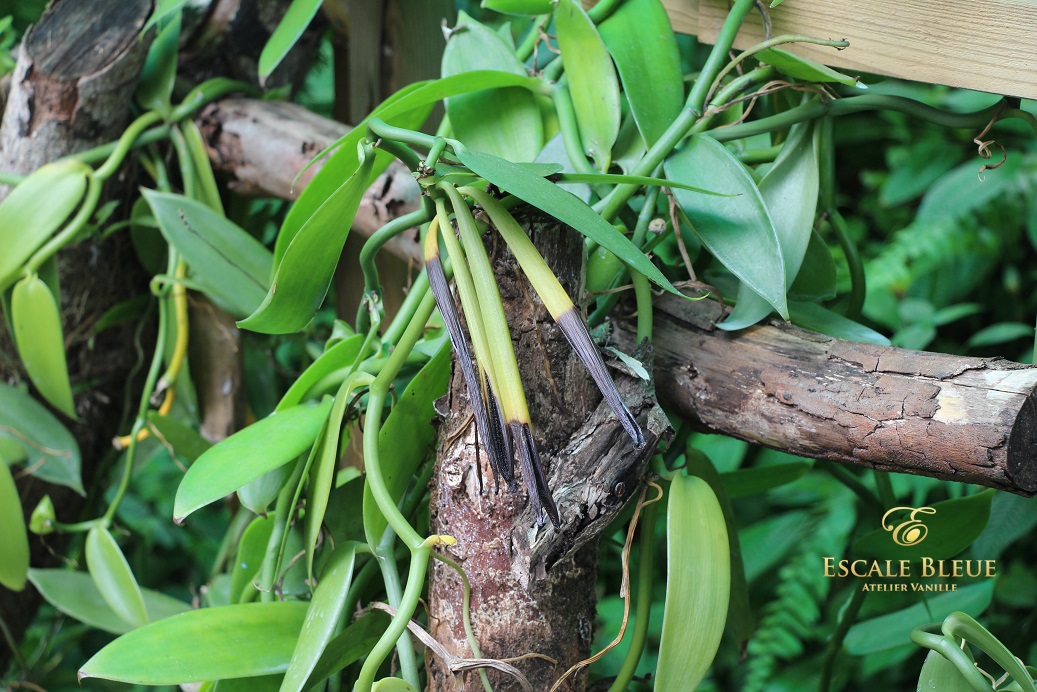
The vanilla orchid (Vanilla planifolia) is a climbing hemiepiphytic vine: it requires a support—usually a tree—to develop, but is not parasitic as it does not draw nourishment from its host. Demanding warmth and humidity, it is found primarily in the East and South of the island, cultivated in understory from Sainte-Anne to Saint-Philippe.
The vanilla orchid is an environmentally friendly plant par excellence, as its growth requires no fertilizer. Humus-rich soil and a humid tropical climate are all the vine needs to thrive, developing its knotted stems along its support.
A vanilla plant produces two to ten clusters, each composed of about a dozen pods. But at harvest stage, the fruits emit no scent yet: it is the lengthy preparation process that will reveal the incomparable aromas of artisanal vanilla from Réunion.

The Marriage of Vanilla: Manual Pollination
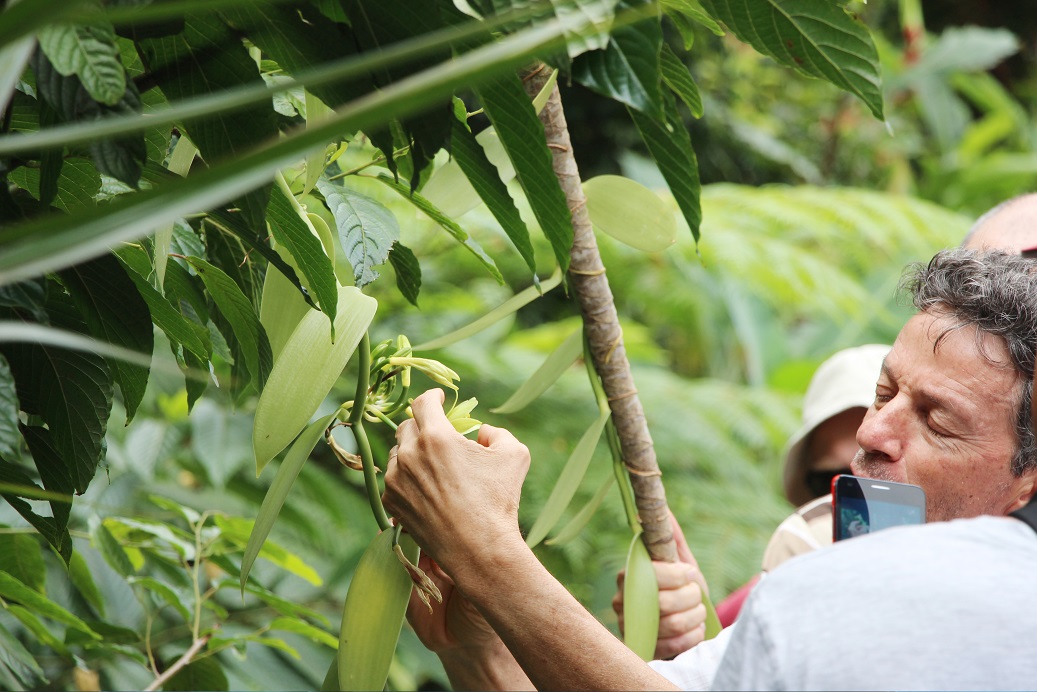
The vanilla flower is hermaphroditic: it contains both male and female organs. However, a thin natural membrane—the rostellum—prevents spontaneous contact between the two. In its native environment in Central America, specific insects perform this pollination by visiting the flower, but in Réunion, their absence makes manual intervention essential.
This delicate operation, poetically called the “marriage of vanilla,” was invented by Edmond Albius in 1841 and remains unchanged since. It is this technique, born in Réunion, that enabled the global expansion of vanilla from Réunion. Using a simple lemon tree thorn or a fine bamboo stylus, the grower lifts the rostellum and brings the stamen and pistil into contact. The gesture is quick—just a few seconds—but requires absolute precision.
Each flower opens for only a few hours before dying and will produce only a single pod. Therefore, between 1,000 and 1,500 flowers per day must be pollinated manually, flower by flower. This meticulous work is performed every morning during the flowering season, which runs from October to December in Réunion.
After pollination, a minimum of 9 months must pass before the pods, still green on the plant, are harvested at full maturity—a period of patience essential for optimal development of aromatic precursors.

Production of Vanilla from Réunion, an Artisanal Secret
In Réunion, small-scale producers prepare their vanilla themselves on their farms. This artisanal expertise, passed down through generations, defines the uniqueness and quality of Réunionese vanilla.
Two fundamental conditions must be met to obtain exceptional vanilla:
Gentle and selective harvesting — It is performed manually, at 15-day intervals, between August and December. A minimum of 9 months will have elapsed between flowering and harvest, allowing optimal aroma development.
Long and natural drying — It takes place over a minimum period of 6 months. Gradually, the vanilla takes on a beautiful black and shiny color and acquires all its aromas. For 1,000 pods, 3,000 to 4,000 manual manipulations are required during this preparation.
Different phases are implemented: scalding (hot water bath that stops vegetative life), sweating (perspiration phase that triggers enzymatic reactions), drying in the sun then in the shade, and finally grading and curing in trunks. The goal is to achieve fragrant vanilla from Réunion that can be stored for several years. This preparation process, ideal for pastry and gourmet cuisine, is what distinguishes artisanal vanilla from Réunion from industrial productions.
The Sweet Scent of Vanilla from Réunion…
Vanilla from Réunion is highly sought after for making pastries, cuisine (the famous duck with vanilla), preparing punches or arranged rums… and even in perfumery. Its aromatic richness—over 200 identified volatile compounds—makes it one of the most complex vanillas in the world. This is why vanilla from Réunion is often considered the finest vanilla for pastry by professionals. It is regularly featured at international gastronomic festivals, such as Étoiles de Mougins.
It is available in many forms: vanilla in whole pods or braided bundles, vanilla powder, natural vanilla extracts, coffee or vanilla tea, and many other variations.
Beyond gastronomy, scientists have discovered that vanilla influences the psyche by providing a sense of well-being. It acts on the olfactory nerves in direct connection with the hypothalamus, a part of the brain that produces dopamine, the neurotransmitter of reward and pleasure. The Arte channel visited Escale Bleue for its X:enius program dedicated to the virtues of spices and vanilla.
Vanille Bleue: Réunionese Innovation
Vanilla from Réunion has long been recognized for its tradition. In 2013, it also proved it could innovate. After more than 20 years of research and development, Escale Bleue, a producer in Saint-Philippe, commercialized Vanille Bleue®—the world’s first patent on a vanilla pod. A first that placed Réunion in the spotlight of international gastronomy.
What makes Vanille Bleue unique: unlike traditional dehydrated vanillas, it retains a supple and fleshy texture that allows you to eat the entire pod, skin included—100% edible, 0% waste. With less than 500 kg produced per year, it remains extremely rare. More than 120 Michelin-starred chefs worldwide have adopted it in their creations.
This innovation has helped change the image of vanilla from Réunion beyond our borders. The Diamond Taste Award 2024 awarded in Brussels, the Stars & Métiers Prize 2024 (Grand Innovation Prize) and the Living Heritage Company label confirmed the product’s excellence. But it is also the recognition that Vanille Bleue has brought to the territory that has been celebrated: Agricultural Merit Medal, Tourism Medal and medal from the city of Saint-Philippe testify to the impact of this vanilla on Réunion’s international recognition. To learn more, visit our dedicated page on Vanille Bleue.


🎬 La vanille de la Réunion sur M6
Lors de l’émission « La Plus Belle Région de France » sur M6, Aimé Leichnig d’Escale Bleue a fait découvrir aux juges — dont le chef Christian Etchebest — le savoir-faire unique de la vanille de la Réunion et la Vanille Bleue. Voici l’extrait vidéo :
Frequently Asked Questions About Vanilla from Réunion
Why is vanilla from Réunion so expensive?
The price of vanilla from Réunion is explained by an entirely artisanal process: manual pollination flower by flower (1,000 to 1,500 per day), 9 months of maturation on the plant, then preparation lasting over a year involving 3,000 to 4,000 manipulations for 1,000 pods. Add to this a low yield and damage from frequent weather hazards. This meticulous work guarantees incomparable aromatic quality.
What is the difference between Bourbon vanilla and vanilla from Réunion?
The term “Bourbon vanilla” today refers to any vanilla produced in the Indian Ocean islands: Réunion, Madagascar and Comoros. Vanilla from Réunion is therefore a Bourbon vanilla, but the reverse is not true. In reality, the vast majority of “Bourbon vanilla” sold commercially comes from Madagascar, where production costs are significantly lower. To ensure Réunionese origin, always verify the traceability and packaging of the product.
How to recognize genuine vanilla from Réunion?
Quality vanilla from Réunion is fragrant and should be neither dry nor brittle. Choose vanilla packaged with clear information: producer’s name, production location, batch number and expiration date. Beware of vanilla sold in open air or vacuum-sealed without indication of origin.
How to store vanilla from Réunion?
Store your pods in sealed packaging or an airtight glass jar, in a dry place, away from light and heat. Never put it in the refrigerator or freezer, which would destroy its aromas. Properly prepared, vanilla from Réunion naturally keeps for several years.
What is Vanille Bleue?
Vanille Bleue is a patented innovation by Escale Bleue—the world’s first patent on a vanilla pod. Unlike traditional dehydrated vanilla, it retains a supple and fleshy texture that allows you to eat the entire pod. More than 120 Michelin-starred chefs worldwide use it, and it received the Diamond Taste Award 2024 from the International Taste Institute in Brussels.
What is the best vanilla for pastry?
Vanilla from Réunion is considered one of the finest vanillas for pastry thanks to its exceptional aromatic richness (over 200 volatile compounds). Its Vanilla planifolia variety develops deep notes of cocoa, caramel and wood that enhance creams, ice creams and doughs. Michelin-starred pastry chefs and Meilleurs Ouvriers de France favor it for its complexity and stability during baking.
Vanilla from Réunion or vanilla from Madagascar: what’s the difference?
Both are Bourbon vanillas (Vanilla planifolia), but they differ in their production method. In Réunion, vanilla is prepared artisanally by the producers themselves, with long aging (minimum 6 months) and very limited volumes. Madagascar produces over 2,000 tons per year in a more industrialized manner. Result: Réunionese vanilla offers a more complex and subtle aromatic profile, which explains its higher price.
Where to buy vanilla from Réunion online?
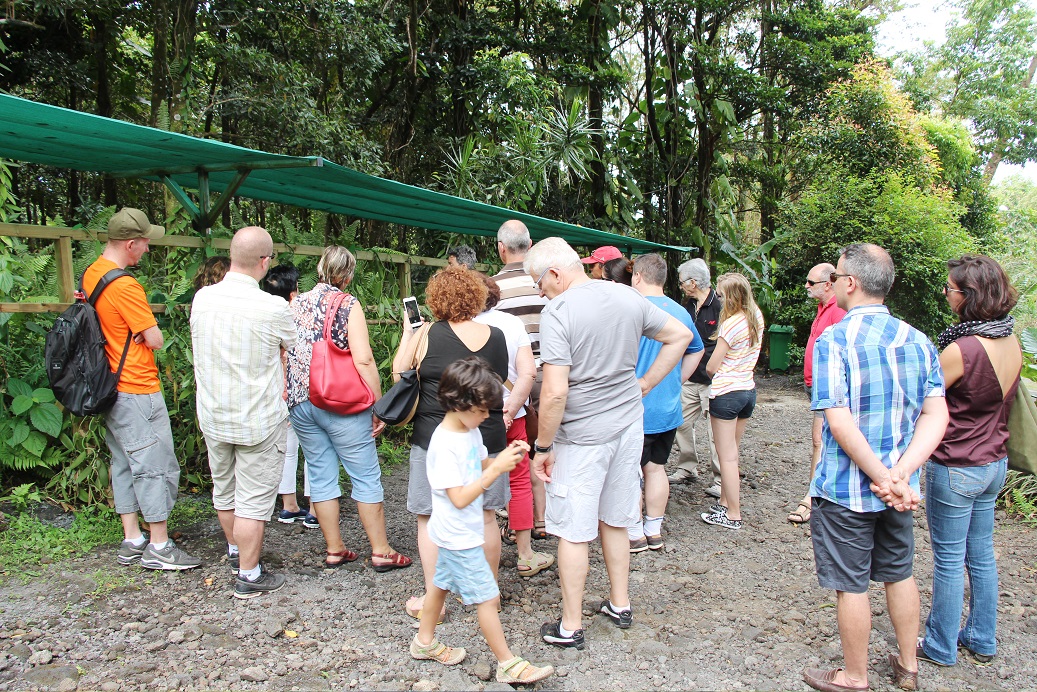
The most reliable option is to buy directly from an identified Réunionese producer. Always verify traceability: producer’s name, farm address, batch number and best-before date. Choose websites that clearly indicate the production location. You can also visit in person during a trip to Réunion—several workshops offer guided tours to discover the preparation expertise.
Vanille Bleue®
The world’s first patent on a vanilla pod—an innovation born in Saint-Philippe